
RSV in Delaware: Care for Every Age
From Milton to Lewes, RSV spreads fast during the colder months. Get the facts on symptoms, prevention and care for every age.


Written by: Corey Alexander
Published on: November 16, 2026
When respiratory season settles over Sussex County, you can feel it. Runny noses, lingering coughs and fevers that seem to make the rounds of every household, classroom and break room from Milton to Lewes to Georgetown.
Flu and the common cold tend to grab the headlines, but there’s another virus that’s just as familiar this time of year. Respiratory syncytial virus, or RSV, is one of the most common illnesses of the colder months. Delaware health officials say it typically peaks in December and January, right when the holidays bring families, grandparents and visiting grandchildren under one roof.
For most people, RSV feels like a cold. For infants, older adults and people with weakened immune systems, it can be much more serious.
What to Look For:
RSV usually starts with a runny nose, a dry cough and a mild fever a few days after exposure. In healthy adults and older kids, symptoms typically stay mild and fade within a week or two.
It’s a different story for older adults and people with heart or lung conditions. A cough that gets deeper instead of easing, new wheezing, or shortness of breath during everyday activities (like climbing stairs or carrying groceries in from the car) can signal the virus has moved into the lungs. That’s your cue to call a doctor.
Babies can be harder to read because they can’t tell you how they feel. Parents should watch for:
- Poor feeding, or refusing the bottle or breast
- Unusual fussiness or sleepiness
- Fast, labored breathing, or brief pauses in breathing
- Flaring nostrils, or skin pulling in around the ribs with each breath
- A bluish color around the lips or fingertips
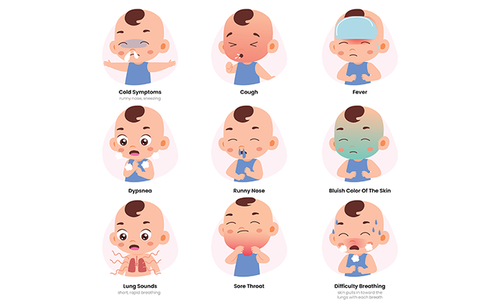
Trust your instincts. If your baby seems to be working hard to breathe, or you can’t shake the feeling that something is off, get care right away.
Protecting Your Family Before RSV Season Peaks
The good news: There are more ways than ever to help protect the most vulnerable.
For babies. The Centers for Disease Control and Prevention says every infant should be protected in one of two ways. Expectant moms can get a single dose of the RSV vaccine (Abrysvo) between weeks 32 and 36 of pregnancy, which is recommended from September through January.
Or, babies younger than 8 months who are born during or heading into their first RSV season can receive a long-acting RSV antibody shot (nirsevimab or clesrovimab).
Most babies need only one or the other, not both. If your baby is born less than two weeks after you were vaccinated, or you’re not sure of your status, the antibody is the safer bet. Ask your OB-GYN or pediatrician which option fits your family.
Some children ages 8 to 19 months who are at increased risk for severe RSV, such as those born prematurely or with chronic lung disease, may be eligible for another dose of nirsevimab before their second RSV season. Your pediatrician can tell you if that applies to your child.
RSV protection isn’t just for babies. The CDC recommends a single dose of RSV vaccine for everyone age 75 and older, whether or not they have other health concerns. It also recommends the vaccine for adults ages 50 to 74 who are at higher risk of severe illness, including people with chronic lung or heart disease, certain forms of diabetes, advanced kidney or liver disease, severe obesity or a weakened immune system, and those who live in a nursing home or long-term care facility.
Unlike the flu shot, the RSV vaccine isn’t an annual shot. If you’ve already had a dose, you’re all set. If you haven’t, talk with your primary care provider or pharmacist.
When to Seek Care at Bayhealth Total Care
A few everyday habits go a long way, too, especially in a community that welcomes so many seasonal visitors and holiday guests:
If symptoms get severe or just aren’t improving, turn to Bayhealth Total Care’s Emergency and Urgent Care Center in Milton.
Our emergency room and urgent care are both open 24 hours a day, seven days a week, with no appointment needed. Every patient is seen by an ER-trained provider, and on-site labs and imaging, including X-ray, ultrasound and CT, mean we can quickly get answers when someone is struggling to breathe.
We also offer pediatric services, so patients of all ages are covered under one roof.
Bayhealth Total Care’s Emergency and Urgent Care Center is located at 18383 Hudson Road, Milton, DE 19968.

Get directions to our Milton location
Services
Emergency Services & Urgent Care Under One Roof